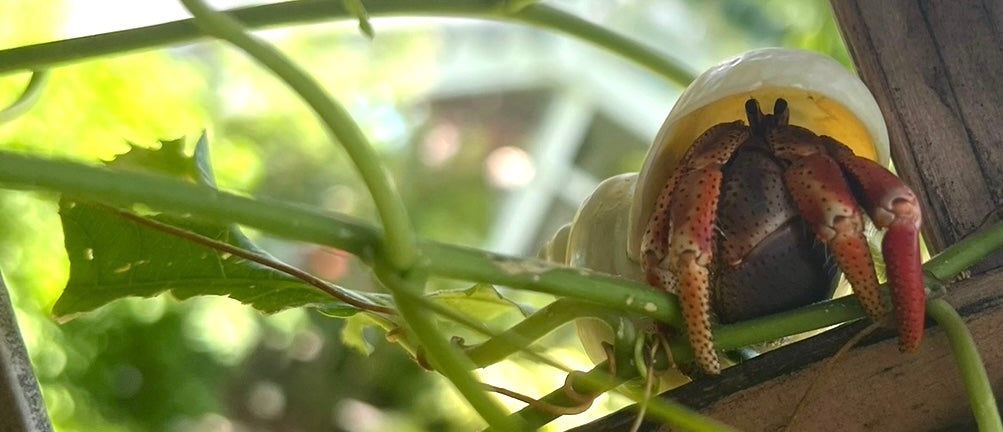
Hermit crabs come from tropical climates. The species most commonly sold as pets, "purple pinchers", come from the Caribbean. It is crucial to their survival to replicate the same conditions as the tropical climates from where they came. Without proper heat and humidity, they will not survive.
Heat
Hermit crabs are cold blooded animals and do not produce body heat. Temperatures in your hermit crabs tank should ideally always be close to 75-85 degrees F. Exotic species of hermit crab, (different than purple pinchers), may require warmer temperatures around 84-85 degrees F.
You will need a UTH (under the tank heat pad). DO NOT place under the tank, despite it's name. Heat pads for hermit crabs should only be placed on outside walls of tank. The entire back length of your tanks exterior back wall should be covered by a heat pad. Measure your back wall and buy heat pad accordingly. Here is a good spot to order UTH's from:
You will also need insulationfor your UTH's so the tank will retain the heat. Cut the insulation to size, and can attach the heat pads to tank and insulation on top via packing tape.
Humidity
Hermit Crabs have modified gills and need proper humidity levels to survive. Without proper humidity, they can suffocate and die. Humidity in your tank should ideally always be between 75%-85%. Exotic species, (different than purple pinchers), may require higher levels such as 84%-85%.
Ways to create and maintain humidity:
Heat pads
Completely sealed glass / plexi glass lid
Sand castle consistency substrate (see "Substrate" tab)
Bubblers in pools
Add sphagnum moss dampened with primed water near heat pads
Proper Lids
In order to keep proper heat and humidity within your hermit crabs tank, it is important to have a completely sealed glass / plexi glass lid. Hermit crabs do not require oxygen the same way humans do, so don't worry about leaving any holes or cracks in the lid for them. They get plenty of oxygen flow whenever you open up tank to feed them!
Check your local pet stores or online for glass lids that are made for the size and type of tank you have. Or, you can get a plexi glass lid cut to size at your local hardware store. Make sure to add a couple of inches to your dimensions when you go to get lid cut, this way it can lay nicely on top of tank.
If you are unable to acquire a glass or plexi glass lid at the time, tin foil can be used as a temporary lid.
Hygrometers
It is important to be able to properly track your hermit crabs tank conditions. A hygrometer will tell you the heat and humidity inside of tank. Use adigital hygrometer instead of an analog one, they are much more accurate.
Make sure to calibrate your hygrometers before using:
The thermostat will help regulate the heat pads. The thermostat comes with a probe. Insert probe against the inside back wall of tank, in the middle of your tank. Probe should be a few inches (around 4 inches) above substrate. Set the thermostat to a desired temperature, ideally around 80 degrees F. Plug heat pad into thermostat, and plug thermostat into outlet. Now, when it gets too hot in tank and reaches temperature above the one you set on thermostat, the thermostat will automatically turn off heat pad. When temperatures reach under the set temperature, the thermostat will turn heat pad back on. Here is a helpful visual on how to set up your thermostat: Setting up your thermostat.
Upgrade your hermit crab care with a personalized 1:1 session with our Founder, Janie. We’ll review your tank, troubleshoot any concerns, and build a care plan that keeps your crabs thriving. Includes detailed follow-up notes and 24/7 email access so you feel confident and supported every step of the way!
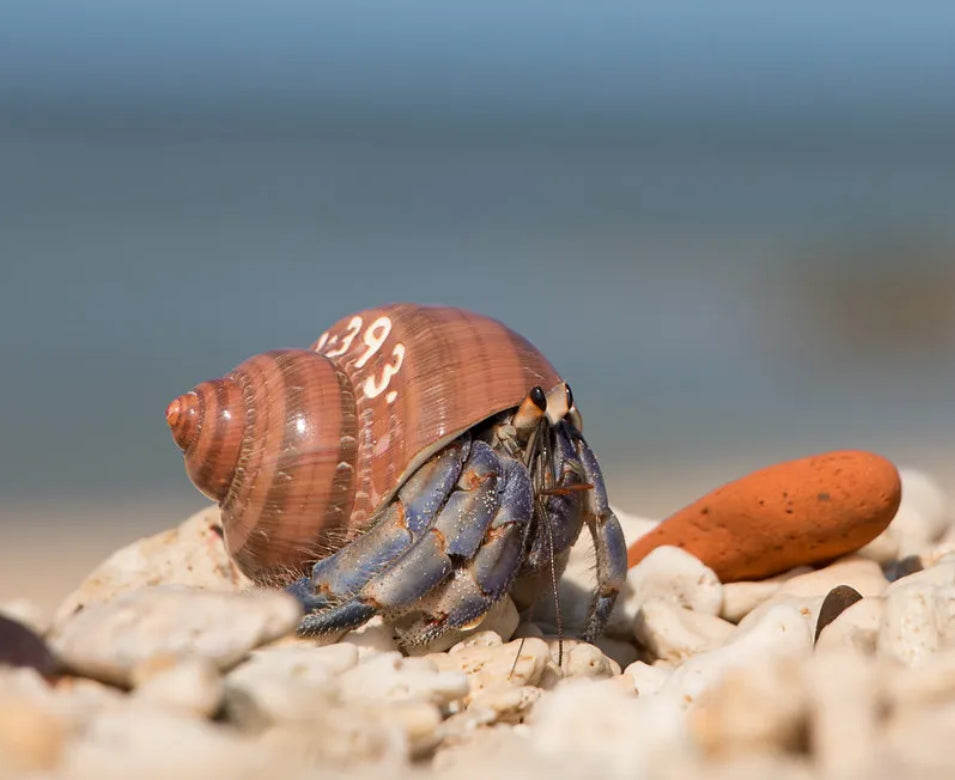
Many shells in the wild are taken by unknowing tourists as a souviener, leaving the wild hermit crabs with limited options and resorting to trash as a make-shift shell. Without proper shells and protection, hermit crabs can unfortuanely die. Consider donating any extra shells you have to the wild hermit crabs with the addresses below :)